Category Archives: Middle East

Domestic Transformations and Foreign Policy Change: The Rise of Revisionist Turkey

The article was first published on Changing Turkey, 06 May 2015.
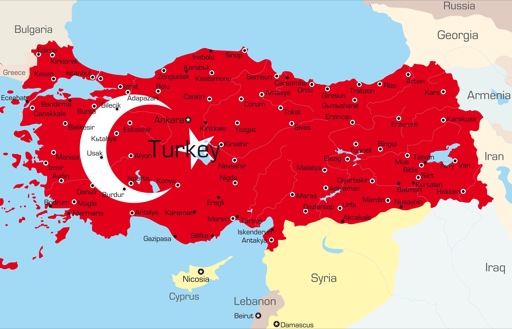
Source: thomaspmbarnett.com/

Source: thomaspmbarnett.com/

The presentation I delivered during the 6th Changing Turkey workshop at Warwick University sought to explore Turkish foreign policy change under the Justice and Development Party (AKP) towards the Middle East from a Neoclassical Realist (NcR) perspective and it was based on my PhD thesis.[i] It was argued that systemic changes in Turkey’s geopolitical environment have been primary in driving Turkey’s foreign policy behaviour with domestic politics being secondary. Within this NcR framework the system level comprises of three independent variables (international power changes, external threat perceptions, international economic interdependence) and two intervening variables (elite ideology and domestic interest groups). The dependent variable is essentially the foreign policy outcome – Turkey’s foreign policy behaviour – with the possibility of variation between status quo and revisionist foreign policy behaviour. To trace the change in Turkish foreign policy (TFP) since the AKP’s election to power (2002) I briefly evaluate the domestic and systemic context of the 2002-2011 and 2011-2013 periods. When it comes to the domestic level I remain focused on one of the two intervening variables (i.e. the AKP elite ideology) for brevity purposes. Continue reading

The Iran-P5+1 Framework: Prospects & Implications

Source: Reuters

By Ioannis-Sotirios Ioannou & Zenonas Tziarras

The article was first published by The European Levant Observatory, Diplomatic Academy – University of Nicosia, April 29, 2015. Access it here.

The historical provisional deal of Lausanne, between the P5+1 countries (United States, France, Russia, China, United Kingdom + Germany) and Tehran for Iran’s nuclear program, merely concerns the definition of the framework of the two negotiating parties for a final agreement in coming June (2015). As such, any enthusiasm that may exist for the outcome of this negotiation process should be mitigated by a more careful and sober approach. Continue reading

A Note on Greek Foreign Policy under Syriza

Source: Reuters

Much has been said and written about the foreign policy that will be followed by the newly-elected coalition government in Greece that consists of majority Syriza (Coalition of the Radical Left) and minority center-to-right wing ANEL (Independent Greeks). Much of the fear-mongering and gloom analysis stems from assumptions that Syriza and many of its members (such as new Foreign Minister Dr. Nikos Kotzias) are anti-European, leftist nationalists and pro-Russian. A short evaluation will show that although we might witness some foreign policy alterations due to the rise of Syriza, they will neither be to an “axis-shift” extent nor, for example, akin to the change that we’ve witnessed in Turkey under the Justice and Development Party (AKP).  Continue reading

Syriza’s Victory and Greek-Israeli Relations

Source: GreekReporter

By Zenonas Tziarras* & Ioannis-Sotirios Ioannou**

The Coalition of Radical Left (Syriza) was the big winner of the Greek national elections of January 25, 2015, as expected. With 36.34% of the votes, Syriza and its leader (now Prime Minister) Alexis Tsipras won 149 seats, two seats shy of absolute majority. New Democracy, of now former Prime Minster Antonis Samaras, came second with 27.86% and 76 seats. Syriza chose to form a coalition government with Panos Kammenos’ populist and far-right (though often-referred to as center-right) Independent Greeks (ANEL), that won 13 seats with 4.8% of the votes. Not only that, but Tsipras appointed Kammenos as the new Minister of Defense. Although leftist Nikos Kotzias, Syriza’s new Foreign Minister, is more cool-headed and pragmatist, if assertive, than Kammenos, the Ministry of Defense plays an important role in security issues and Kammenos might adopt a harder line that could challenge Greece’s overall foreign policy with particular respect to relations with Turkey and Israel. Overall, these developments may signal a new approach in Greek foreign policy on issues ranging from the EU, to Russia and the Eastern Mediterranean. Continue reading

Talk in London: Turkish Foreign Policy Today – Strategic Depth or Downfall

ASSOCIATION FOR CYPRIOT, GREEK & TURKISH AFFAIRS

General Secretary: Dr Zenon Stavrinides – Z.Stavrinides@lineone.net

 Thursday 22 January 2015 at 6.30 p.m.

Boothroyd Room Portcullis House – Bridge Street, London SW1A 2LW

Turkish Foreign Policy Today: Strategic Depth or Downfall

By Zenonas Tziarras

Chairman: Alper Riza, QC Continue reading