Tag Archives: Turkey

NEW PAPER: Revisiting the Foreign Policy of the Republic of Cyprus and Quasi-Alliances in the Eastern Mediterranean

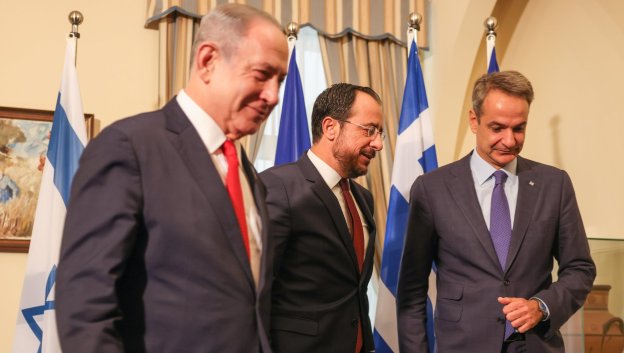
I am pleased to share my latest research, “Revisiting the Foreign Policy of the Republic of Cyprus and Quasi-Alliances in the Eastern Mediterranean,” where I analyze how Cyprus has adapted to geopolitical shifts and positioned itself within evolving regional power structures.

Abstract

The Eastern Mediterranean has emerged as a significant geopolitical region in the 21st century, influenced by both intra-regional dynamics and the strategic interests of international powers. The Republic of Cyprus (RoC)—a small state within this region—has endeavored to adapt to the evolving international landscape and promote its own strategic interests. This paper examines the RoC’s foreign policy in the Eastern Mediterranean, particularly its involvement in regional cooperation and the formation of quasi-alliances. The primary focus is twofold: situating the RoC’s foreign policy within the international-regional nexus (particularly US policy in the Eastern Mediterranean and US–RoC relations) and assessing its strategic objectives and priorities. The analysis revisits the formation of quasi-alliances, such as the Israel–Cyprus–Greece and Egypt–Cyprus–Greece partnerships, and regional networks of cooperation. The key questions addressed include the success of RoC policy since the early 2010s, the positives and negatives of its approach, and the preconditions for a more effective foreign policy. The paper concludes that, despite notable progress, the RoC’s foreign policy suffers from a lack of vision, strategic planning, and institutional capacities, making it vulnerable to domestic politics, populist rhetoric, and geopolitical shifts.

Key Insights from the Paper

🔹 The rise of quasi-alliances – Cyprus has formed strategic partnerships with Israel, Greece, and Egypt, strengthening its regional presence.
🔹 Perceptions of threat vis-a-vis Turkey and the prospect of energy cooperation played a key role in shaping regional quasi-alliances.
🔹 The role of the United States – Over time, Washington has integrated Cyprus into its regional security framework, lifting arms embargoes and expanding cooperation.
🔹 Challenges & limitations – While these partnerships have enhanced Cyprus’ diplomatic reach, they remain informal, lack military commitments, and are often vulnerable to external geopolitical shifts.
🔹 The need for stronger strategic planning – For Cyprus to maintain and expand its influence, it must enhance institutional capacities and develop a more proactive foreign policy vision.

This research contributes to the broader discourse on small state foreign policy, regional security dynamics, and energy geopolitics in the Eastern Mediterranean.

📄 You can read the full paper here

Feel free to reach out with comments or questions.
PhD Thesis: Turkish Foreign Policy towards the Middle East under the AKP (2002-2013): A Neoclassical Realist Account

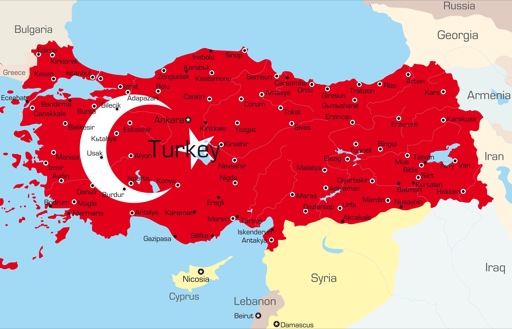
Below you may find the abstract of my PhD thesis, completed in 2014, on Turkish foreign policy in the Middle East under the AKP. The thesis was recently released online by the University of Warwick. You may reach the full document here.

turkey+rising

Source: thomaspmbarnett.com/

Continue reading

Turkey – the “new Iran”: Revolution & Foreign Policy (Working Paper)

Working Paper Turkey IranTurkey – the “new Iran”: Revolution & Foreign Policy (Working Paper no. 52) has been published by the Greece-based Academy for Strategic Analyses, in July 2016.

The first draft was completed in March, 2016 and was updated a few days before publication, after the coup attempt in Turkey.

Abstract

One of the most important side-effects of the turmoil in the Middle East has been the crisis in Turkey’s relations with its Western partners. However, the events taking place in the Middle East or the Syria war are not the root causes of this friction; merely a triggering factor. The real reasons lie in the multileveled transformation, a sort of “revolution”, that Turkey has been going through over the past years and particularly since the election of the Justice and Development Party (Adalet ve Kalkınma Partisi, or AKP) to power in 2002. These domestic changes usher in a new era for Turkey’s political scene that has many similarities – as well as differences – with Iran’s Islamic revolution of 1979. As a result, its national identity and ideological orientation shifts, something that undoubtedly impacts its foreign policy preferences, and as such will pose significant challenges to Western actors that try to work with Turkey and secure their interests in the region.

You may also find the PDF on Academia.edu, here.

Turkey-EU and Erdogan’s Two-Level Game

The latest developments show that the Turkey-European Union (EU) deal on the refugee crisis is in limbo. On the one hand, the EU (through Merkel) seems to be standing firm regarding Turkey meeting all criteria (including the amendment of the anti-terror law) for the liberalization of visas for Turkish citizens. On the other hand, Turkish president, Recep Tayyip Erdogan, is relentless; he is unwilling to accept the amendment of the law under the pretext of Turkey’s need to fight the Islamic State and the Kurdistan Workers’ Party (PKK). Even though the definition of “terrorism” is so broad that actually allows the violation of freedom of speech and freedom of press since virtually anything could be deemed pro-terrorism propaganda. Academics, journalists and (Kurdish) MPs have already been prosecuted for this reason.

merkel-and-erdogan-at-istanbul-humanitarian-summit

Source: euractiv.com

Continue reading

On Bombing Syria

The United Kingdom and Germany have been the latest powers to join the war in Syria though Germany’s contribution will be in ground forces and aerial reconnaissance operations. The UK’s decision has stirred up a heated debate about whether this is the right line of action that should be followed from London, or any other country for that matter.

International bombing operations in Syria have been taking place at least since September 2014 in the context of the Western anti-ISIS “Coalition of the Willing” led by the United States. States like the U.S., France, Jordan, Saudi Arabia, Bahrain, United Arab Emirates, Turkey, Qatar, Germany and the UK are participating in one way or another in this coalition. On the other end, Russia and the Syrian regime are also conducting large scale military operations. (See map below)

zones in syria

Source: geopolitical-info.com

Continue reading