The article was first published on Changing Turkey, 06 May 2015.
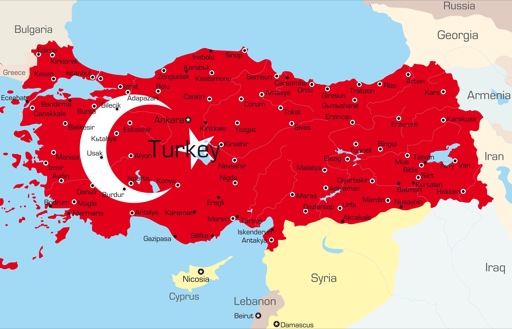
Source: thomaspmbarnett.com/
The presentation I delivered during the 6th Changing Turkey workshop at Warwick University sought to explore Turkish foreign policy change under the Justice and Development Party (AKP) towards the Middle East from a Neoclassical Realist (NcR) perspective and it was based on my PhD thesis.[i] It was argued that systemic changes in Turkey’s geopolitical environment have been primary in driving Turkey’s foreign policy behaviour with domestic politics being secondary. Within this NcR framework the system level comprises of three independent variables (international power changes, external threat perceptions, international economic interdependence) and two intervening variables (elite ideology and domestic interest groups). The dependent variable is essentially the foreign policy outcome – Turkey’s foreign policy behaviour – with the possibility of variation between status quo and revisionist foreign policy behaviour. To trace the change in Turkish foreign policy (TFP) since the AKP’s election to power (2002) I briefly evaluate the domestic and systemic context of the 2002-2011 and 2011-2013 periods. When it comes to the domestic level I remain focused on one of the two intervening variables (i.e. the AKP elite ideology) for brevity purposes. Continue reading

 Zenonas Tziarras