
A new paper was released by the Journal of Applied Security Research entitled “Islamic Caliphate: A Quasi-State, A Global Security Threat“.
Abstract
 This article examines the “Islamic State” (IS) phenomenon that has shaken the Middle East since the summer of 2014 as well as its large-scale security implications. To this end the article provides a brief historical background on IS, explores and defines its organizational character, as well as identifies and evaluates the different kinds of security threats posed by IS at the regional and global levels. The argument is that IS is not a typical case of a terrorist organization. It is rather a fusion of a state, an insurgency, and a terrorist organization that could be best described as a “quasi-state.” Further, the security threats posed by IS are categorized into conventional and asymmetrical (or nonconventional) ones. The former regard the regional level, while the latter can even have global repercussions. The article concludes with an assessment of IS’s most important security threats and highlights the importance of dealing with its extremist ideology and the conditions that fuel it.
The paper can also be accessed on Academia.edu.
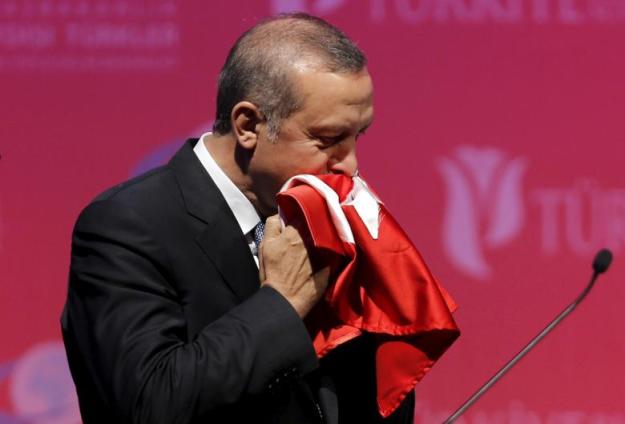 Υπάρχει μια δυσκολία αλλά φαίνεται πως θα επικρατήσει το `ναι` στο δημοψήφισμα της 16ης Απριλίου στην Τουρκία για τις συνταγματικές μεταρρυθμίσεις που θα ενισχύσουν τον νυν Πρόεδρο, Ταγίπ Ερντογάν, ένα δημοψήφισμα που κρίνεται κρίσιμο για τη μετέπειτα ιστορία της χώρας, αλλά και για την πορεία του “ερντογανικού Ισλάμ”.
 Ποια είναι η νομική υπόσταση της στρατιωτικής επιχείρησης της Τουρκίας στη Συρία, έρχεται σε αντίθεση με το ψήφισμα 2254 του ΟΗΕ και το Διεθνές Δίκαιο;
 Zenonas Tziarras