Tag Archives: US foreign policy

NEW PAPER: Revisiting the Foreign Policy of the Republic of Cyprus and Quasi-Alliances in the Eastern Mediterranean

I am pleased to share my latest research, “Revisiting the Foreign Policy of the Republic of Cyprus and Quasi-Alliances in the Eastern Mediterranean,” where I analyze how Cyprus has adapted to geopolitical shifts and positioned itself within evolving regional power structures.

Abstract

The Eastern Mediterranean has emerged as a significant geopolitical region in the 21st century, influenced by both intra-regional dynamics and the strategic interests of international powers. The Republic of Cyprus (RoC)—a small state within this region—has endeavored to adapt to the evolving international landscape and promote its own strategic interests. This paper examines the RoC’s foreign policy in the Eastern Mediterranean, particularly its involvement in regional cooperation and the formation of quasi-alliances. The primary focus is twofold: situating the RoC’s foreign policy within the international-regional nexus (particularly US policy in the Eastern Mediterranean and US–RoC relations) and assessing its strategic objectives and priorities. The analysis revisits the formation of quasi-alliances, such as the Israel–Cyprus–Greece and Egypt–Cyprus–Greece partnerships, and regional networks of cooperation. The key questions addressed include the success of RoC policy since the early 2010s, the positives and negatives of its approach, and the preconditions for a more effective foreign policy. The paper concludes that, despite notable progress, the RoC’s foreign policy suffers from a lack of vision, strategic planning, and institutional capacities, making it vulnerable to domestic politics, populist rhetoric, and geopolitical shifts.

Key Insights from the Paper

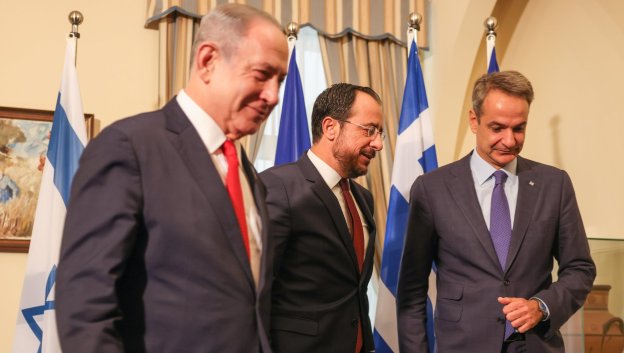
🔹 The rise of quasi-alliances – Cyprus has formed strategic partnerships with Israel, Greece, and Egypt, strengthening its regional presence.
🔹 Perceptions of threat vis-a-vis Turkey and the prospect of energy cooperation played a key role in shaping regional quasi-alliances.
🔹 The role of the United States – Over time, Washington has integrated Cyprus into its regional security framework, lifting arms embargoes and expanding cooperation.
🔹 Challenges & limitations – While these partnerships have enhanced Cyprus’ diplomatic reach, they remain informal, lack military commitments, and are often vulnerable to external geopolitical shifts.
🔹 The need for stronger strategic planning – For Cyprus to maintain and expand its influence, it must enhance institutional capacities and develop a more proactive foreign policy vision.

This research contributes to the broader discourse on small state foreign policy, regional security dynamics, and energy geopolitics in the Eastern Mediterranean.

📄 You can read the full paper here

Feel free to reach out with comments or questions.

Turkey – the “new Iran”: Revolution & Foreign Policy (Working Paper)

Working Paper Turkey IranTurkey – the “new Iran”: Revolution & Foreign Policy (Working Paper no. 52) has been published by the Greece-based Academy for Strategic Analyses, in July 2016.

The first draft was completed in March, 2016 and was updated a few days before publication, after the coup attempt in Turkey.

Abstract

One of the most important side-effects of the turmoil in the Middle East has been the crisis in Turkey’s relations with its Western partners. However, the events taking place in the Middle East or the Syria war are not the root causes of this friction; merely a triggering factor. The real reasons lie in the multileveled transformation, a sort of “revolution”, that Turkey has been going through over the past years and particularly since the election of the Justice and Development Party (Adalet ve Kalkınma Partisi, or AKP) to power in 2002. These domestic changes usher in a new era for Turkey’s political scene that has many similarities – as well as differences – with Iran’s Islamic revolution of 1979. As a result, its national identity and ideological orientation shifts, something that undoubtedly impacts its foreign policy preferences, and as such will pose significant challenges to Western actors that try to work with Turkey and secure their interests in the region.

You may also find the PDF on Academia.edu, here.

Countering ISIS: A Special Kind of Insurgency

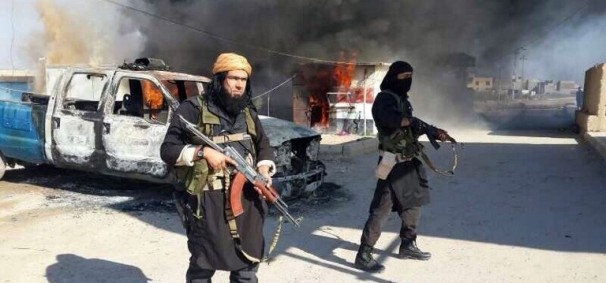
Iraq-ISIS-606x283It is commonplace these days to refer to the Islamic State of Iraq and al-Shām (i.e. Greater Syria) – henceforth, ISIS – as the greatest threat to regional, international, and for some countries, even national security. As a product of mergers between smaller Islamist groups (e.g. an al-Qaeda affiliated Iraqi group) in the aftermath of the 2003 US-led Iraq invasion, this rapidly evolving organization has been empowered in the context of the Syrian civil war, and has surprised the world when it swept into northern and central Iraq early June 2014. It has changed its name into Islamic State (IS) and declared the establishment of an Islamic Caliphate – a state run according to Sharia law – in Syrian and Iraqi territories.

One of the biggest questions that needs to be answered is, how do we counter ISIS? Almost three months after ISIS advanced into Iraq, US President Barak Obama stated, “We don’t have a strategy.” This was quite a surprising statement coming from the White House given the high level of threat that ISIS poses; but it is, nonetheless, true. However, it was later decided for Obama to announce his plan against ISIS in an address to the nation on September 10th. Among other things, Obama is expected to introduce ways of enhancing international cooperation against ISIS and try to display a more coherent and decisive stance than the one presented thus far. Continue reading