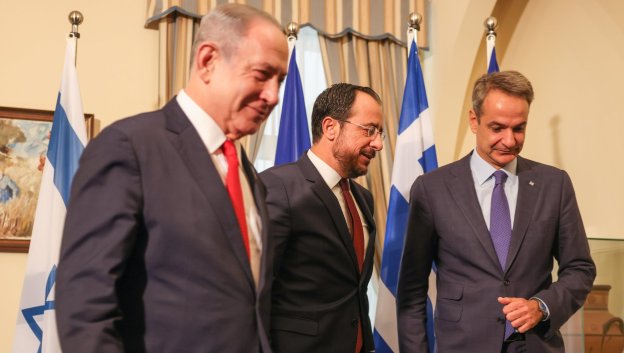
I am pleased to share my latest research, “Revisiting the Foreign Policy of the Republic of Cyprus and Quasi-Alliances in the Eastern Mediterranean,” where I analyze how Cyprus has adapted to geopolitical shifts and positioned itself within evolving regional power structures.
Abstract
The Eastern Mediterranean has emerged as a significant geopolitical region in the 21st century, influenced by both intra-regional dynamics and the strategic interests of international powers. The Republic of Cyprus (RoC)—a small state within this region—has endeavored to adapt to the evolving international landscape and promote its own strategic interests. This paper examines the RoC’s foreign policy in the Eastern Mediterranean, particularly its involvement in regional cooperation and the formation of quasi-alliances. The primary focus is twofold: situating the RoC’s foreign policy within the international-regional nexus (particularly US policy in the Eastern Mediterranean and US–RoC relations) and assessing its strategic objectives and priorities. The analysis revisits the formation of quasi-alliances, such as the Israel–Cyprus–Greece and Egypt–Cyprus–Greece partnerships, and regional networks of cooperation. The key questions addressed include the success of RoC policy since the early 2010s, the positives and negatives of its approach, and the preconditions for a more effective foreign policy. The paper concludes that, despite notable progress, the RoC’s foreign policy suffers from a lack of vision, strategic planning, and institutional capacities, making it vulnerable to domestic politics, populist rhetoric, and geopolitical shifts.
Key Insights from the Paper
🔹 The rise of quasi-alliances – Cyprus has formed strategic partnerships with Israel, Greece, and Egypt, strengthening its regional presence.
🔹 Perceptions of threat vis-a-vis Turkey and the prospect of energy cooperation played a key role in shaping regional quasi-alliances.
🔹 The role of the United States – Over time, Washington has integrated Cyprus into its regional security framework, lifting arms embargoes and expanding cooperation.
🔹 Challenges & limitations – While these partnerships have enhanced Cyprus’ diplomatic reach, they remain informal, lack military commitments, and are often vulnerable to external geopolitical shifts.
🔹 The need for stronger strategic planning – For Cyprus to maintain and expand its influence, it must enhance institutional capacities and develop a more proactive foreign policy vision.
This research contributes to the broader discourse on small state foreign policy, regional security dynamics, and energy geopolitics in the Eastern Mediterranean.
📄 You can read the full paper here
Feel free to reach out with comments or questions.
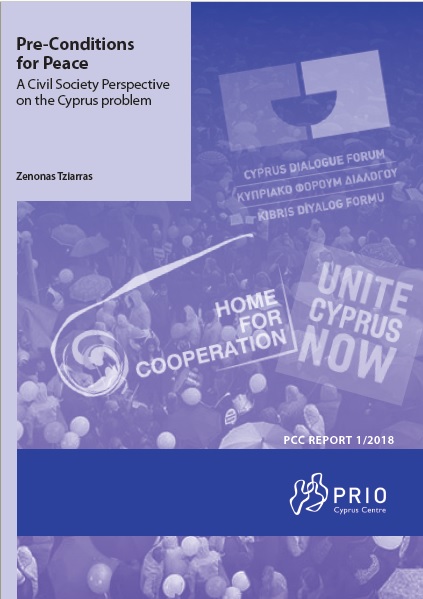 Against the background of Cypriot civil society’s growing role since the early 2000s, this report aims to track the progress or lack thereof and identify the limitations and prospects of pro-peace grassroots mobilization in Cyprus. As such, it focuses on three contemporary case studies of pro-peace civil society in Cyprus: The Home for Cooperation, Cyprus Dialogue Forum and United Cyprus Now. Each case study provides a different perspective of pro-peace civil society mobilization. The Home for Cooperation is looked at as one of the older and main initiatives given that it functions as a meeting space that hosts other pro-peace civil society organizations and initiatives as well. The Cyprus Dialogue Forum is examined as probably the biggest, most ambitious and most structured platform of multi-segment intercommunal dialogue thus far. The Unite Cyprus Now initiative is quite different to the previous two in that it emerged rather spontaneously at the grassroots level, with extensive use of social media, and it still remains largely decentralized.
 Source: Reuters
 Over the past ten years or so the foreign policy of Cyprus, more specifically the Republic of Cyprus, has improved significantly in that it has started, despite some persisting problems and dilemmas, to realize and utilize the island’s geostrategic role. To this emerging reality contributed three main factors: i) the maturing of the country’s political elites; ii) Turkey’s increasing self-aggrandizement and destabilizing foreign policy which led it to multiple diplomatic and strategic dead-ends; and iii) Cyprus’ delimitation of its maritime Exclusive Economic Zone with Egypt, Lebanon and Israel and the discovery of hydrocarbons within it.
  Zenonas Tziarras