The Geopolitical Impact of ISIS: Actors, Factors, and Balances of Power in the Middle East

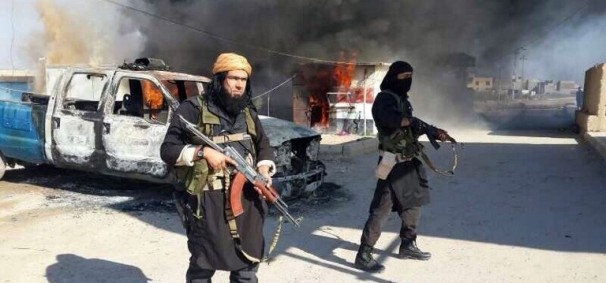
Isis fighters, pictured on a militant website verified by AP.

Source: The Guardian

The ISIS Threat

Generally speaking, the emergence of ISIS has posed a significant security threat to regional and international states alike; a threat which challenges the stability and territorial integrity of regional states as well as Western regional interests. As known from International Relations and particularly Realism literature, (mutual) security threats are one of the most important factors in the formation of different kinds of alliances. As such, it is without surprise that we see unlike partnerships to emerge, such as the ones mentioned below. Continue reading

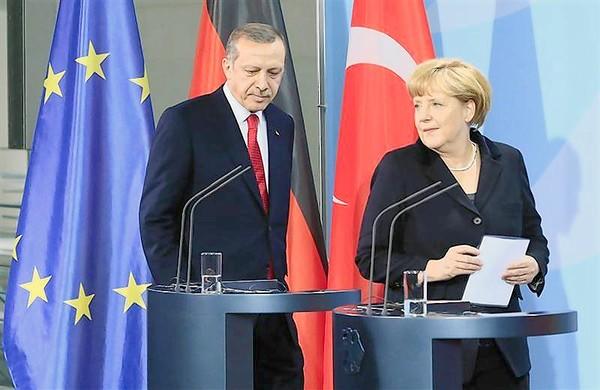
Βασανιστική η Εμμονή για Τουρκία-Ε.Ε.

Source: Reuters

Σε άρθρο στον “Φιλελεύθερο” του Σαββάτου (σ. 35 – 20/09/2014), γράφει μεταξύ άλλων τα εξής:

“To έχω πεί δεκάδες φορές και επιβεβαιώνομαι από τους ίδιους τους Τούρκους. Η Τουρκία θεωρεί την ένταξή της στην Ε.Ε. ως πρώτιστο στόχο. Διά στόματος Βολκάν Μποζκίρ, υπουργού Ε.Ε., μας το είπε ξεκάθαρα προχθές: ‘Στρατηγικό στόχο της Τουρκίας αποτελεί η ένταξη της στην Ε.Ε.’. Ακούει κανείς εκεί στο Προεδρικό ή κάνουν πως δεν καταλαβαίνουν; Και αντί να χρησιμοποιήσουμε το μοναδικό μας όπλο, την ιδιότητα μας ως πλήρες μέλος της Ε.Ε., σκεφτόμαστε να δελεάσουμε τη Τουρκία με τους υδρογονάνθρακές μας.”

Το όνομα του συγγραφέα δεν αναφέρεται καθώς δεν μας απασχολεί ιδιαίτερα. Περισσότερο ανησυχητική είναι αυτή η λανθασμένη θεώρηση που εμμένει βασανιστικά στο να πιστεύει πως η Τουρκία θέλει πάση θυσία να ενταχθεί στην Ε.Ε. Continue reading

Countering ISIS: A Special Kind of Insurgency

Iraq-ISIS-606x283It is commonplace these days to refer to the Islamic State of Iraq and al-Shām (i.e. Greater Syria) – henceforth, ISIS – as the greatest threat to regional, international, and for some countries, even national security. As a product of mergers between smaller Islamist groups (e.g. an al-Qaeda affiliated Iraqi group) in the aftermath of the 2003 US-led Iraq invasion, this rapidly evolving organization has been empowered in the context of the Syrian civil war, and has surprised the world when it swept into northern and central Iraq early June 2014. It has changed its name into Islamic State (IS) and declared the establishment of an Islamic Caliphate – a state run according to Sharia law – in Syrian and Iraqi territories.

One of the biggest questions that needs to be answered is, how do we counter ISIS? Almost three months after ISIS advanced into Iraq, US President Barak Obama stated, “We don’t have a strategy.” This was quite a surprising statement coming from the White House given the high level of threat that ISIS poses; but it is, nonetheless, true. However, it was later decided for Obama to announce his plan against ISIS in an address to the nation on September 10th. Among other things, Obama is expected to introduce ways of enhancing international cooperation against ISIS and try to display a more coherent and decisive stance than the one presented thus far. Continue reading

Το Ισλαμικό Κράτος και η Κύπρος

Source: pamelageller.com

Σε πρόσφατο δημοσίευμα του SigmaLive είχαμε παρατηρήσει την πιθανή απειλή που αποτελεί το Ισλαμικό Κράτος για την Κύπρο. Ως γνωστό, το Ισλαμικό Κράτος (ή Ισλαμικό Χαλιφάτο) έχει προκύψει από την επιδρομή της Ισλαμιστικής εξτρεμιστικής οργάνωσης ISIS (Ισλαμικό Κράτος του Ιράκ και της Μεγάλης Συρίας) το οποίο ενδυναμώθηκε εν μέσω του συριακού εμφυλίου πολέμου και προχώρησε στην κατάληψη εδαφών στο (βόρειο) Ιράκ και τη Συρία. Προσδοκεί δε, την επέκταση του και στην Ευρύτερη Μέση Ανατολή και την Ανατολική Μεσόγειο – περιλαμβανομένης και της Κύπρου.

Επειδή όμως έχει αναπτυχθεί μια συζήτηση η οποία από τη μια κινδυνολογεί και από την άλλη υποβαθμίζει τους υπαρκτούς κινδύνους σε σχέση με το εν λόγω ζήτημα, θεωρούμε ότι είναι ανάγκη να ξεκαθαρίσουμε κάποια πράγματα θέτοντάς τα σε μια πιο ρεαλιστική βάση. Με αυτή τη λογική, πιο κάτω παραθέτονται οι τρόποι με τους οποίους το Ισλαμικό Κράτος αποτελεί πιθανή απειλή για την Κύπρο αλλά και τις επιλογές της Κυπριακής Δημοκρατίας. Continue reading

Turkey, Kurds and the Islamic State: A Strange Triangle

Among the paradoxes of the Middle East today is Turkey’s relationship with Iraqi Kurds and the “public secret” of its relationship with Islamic State which has seized territories in Syria and Iraq and has announced the de facto establishment of an Islamic Caliphate. How could Turkey’s collaboration with the Kurds – whom it used to see as a threat – be explained, and what does it have to gain from Islamic State?

That Turkey (along with Qatar, Saudi Arabia, and other Western powers) has funded and supported Islamic State (IS) is a fact, though neither Turkey nor Qatar admit it. Is it possible that Turkey uses IS against the Kurdish separatist movement in Iraq, Syria and beyond? Such scenario is not supported by the evidence at hand. If for example Turkey wanted to deter the independence of Iraqi Kurdistan then it would not have ignored provisions of the Iraqi constitution and the central Iraqi government of Baghdad, among others, to sign economic and energy agreements with Kurdish Regional Government. Rather, it would have done the opposite: to try and isolate Kurdistan by cooperating with Baghdad. That would be similar to how Turkey acted when it cooperated with Baghdad in the middle to late 2000s while trying to deal with Kurdish guerillas who found safe haven in Iraqi Kurdistan and other locations on Turkey’s southern borders. Moreover, we should not forget that the emergence of IS accelerated Kurdistan’s process of independence instead of the opposite – both in Iraq and Syria. Continue reading