Author Archives: Zenonas Tziarras

The Misunderstanding of Geopolitics

“Geopolitics traditionally indicates the links and causal relationships between political power and geographic space; in concrete terms it is often seen as a body of thought assaying specific strategic prescriptions based on the relative importance of land power and sea power in world history…”[1]
Geopolitics is often misunderstood and perceived as a monolithic methodological tool for international relations analysis that suggests an unchanged geographical structure within the international system. There was a time when this kind of thinking was very prominent and defined states’ understanding of the world as well as playing a crucial role in forming national strategy and foreign policy. With its roots in the 19th century, geopolitics or, more specifically, political geography, was based on very narrow ideas regarding how human behaviour was affected from its relation with space, geomorphology in particular, and climate.
Later, in the early 20th century, international politics analysts used geopolitics as a tool to find patterns and laws that could holistically explain the nature of the international system and thus help their governments form strategies based on their “geopolitical findings”. Such geo-politicians, to mention only a few, were Alfred Mahan, Halford Mackinder and Karl Haushofer. It is worth noting that many of those analysts were employed by their governments to find ways of explaining world politics and geopolitical realities. Therefore, many of their ideas aimed at the construction of certain perceptions of the global system in order to justify national policies towards specific regions of the world. In the case of the United Kingdom or the USA this worked fairly well but not so much in Nazi Germany, for example.
Specifically it has been argued that the ideas of the, previously mentioned, German geo-politician Karl Haushofer, and other Germans of the same mind, defined Nazi Germany’s strategy. But this has little truth in it. After all, the most important factor that affected Germany’s international policy was “race” and not geopolitical realities.[2] Later, after the end of WWII, traditional geopolitical theory was referred to as very vague and shallow[3] while many geopolitics theorists were proved wrong. Consequently, traditional geopolitical analysis has become largely outdated. In this light, one could argue that such approaches are actually international relations analyses from the perspective of Realist theory – which of course takes into account geopolitical realities – given that Realism became prominent after the end of WWII and during the Cold War. From that perspective Realism explains state behaviour better than simple geographically-based understandings of policy-making. That is because Realism is based on the very plausible notion that states act within an anarchic international system and that their ultimate goal is the increase of their power – or, according to Neo-Realism, to improve their security through the power increase. This is a more valid approach than a traditional geopolitical explanation which suggests that state policy is based on the perceptions of certain unchangeable geopolitical axes or geographical space. It is true that states follow geopolitical – either hard or soft power – strategies but they do not do so by following certain diachronic geopolitical axes; instead, they adapt their policies to the constant geopolitical developments in their regions and all over the world. Geopolitical axes do shift.
Contemporary Geopolitics:“Critical geopolitics is no more than a general gathering place for various critiques of the multiple geopolitical discourses and practices that characterizes modernity… It is merely a starting point for a different form of geopolitics, one hopefully burdened less by nationalism and chauvinistic universals and more committed to cosmopolitan justice and self-critical analysis”.[4]
Geopolitics has come a long way since the end of WWII and includes much more than just a structural understanding of the world.[5] Furthermore, we should see geopolitics for what it is and not as an opportunity to make generalisations. Even as a Weberian “ideal type” the term in question cannot only include simplified analyses. “Geopolitics” is a meta-language term which cannot be defined by geography alone. The only aspects of geography that remain relatively unchanged are geomorphology and geology. Political geography and human geography are constantly changing. Think, for example of the former Yugoslavia, Soviet Union, Iraq and now Libya. The geopolitical borders have been – or are being – re-formed and the regional balances of power have changed. That is why geopolitics is never stable; they are not defined by the geo but rather by the politics taking place in a certain geographical context.
The new energy developments in the Eastern Mediterranean and Caucasus are revealing new oil resources while the melting of the Arctic ice and other extreme weather conditions constitute geographical and therefore geopolitical changes. As a result countries that were, until now, off the global politics chessboard might become more important due to their geographical proximity to these developments. Also, domestic and international political and diplomatic relations as well as the various intra- or inter-state wars often result in the creation of new states thus altering the regional and consequently the global balances of power. This means that geographical changes along with geopolitical changes create an unstable and fluid international system which cannot be locked within the normative framework of traditional and outdated geopolitical explanations like Makinder’s “global island” or Haushofer’s “pan-regions”. However, for the sake of objectivity and to conclude, it has to be acknowledged that in certain contexts and historical periods, such explanations may provide helpful insights.


References
[1] Osterud O., “The Uses and Abuses of Geopolitics”, Journal of Peace Research, Volume 25, No.2, 1988.
[2] See, Chouliaras A., Geographical Myths of International Politics, Roes, Athens, 2004, p.21.
[3] Clover C., “Dreams of the Eurasian Heartland, Foreign Affairs, Volume 78, No.2, March-April, pp.9.
[4] O’Tuathail Gearoid in Laura Jones and Daniel Sage, “New Directions in Critical Geopolitics: an Introduction”, GeoJournal, Volume 75, No. 4, 2010, pp. 316.
[5] For an introduction to the wide scope of geopolitics see, Klaus Dodds, Geopolitics: A Very Short Introduction, Oxford University Press, 2007.
By Zenonas Tziarras
Published on Global Politics, on July 16, 2011 – www.global-politics.co.uk
Η Κυπριακή Τραγωδία της 11ης Ιουλίου, 2011


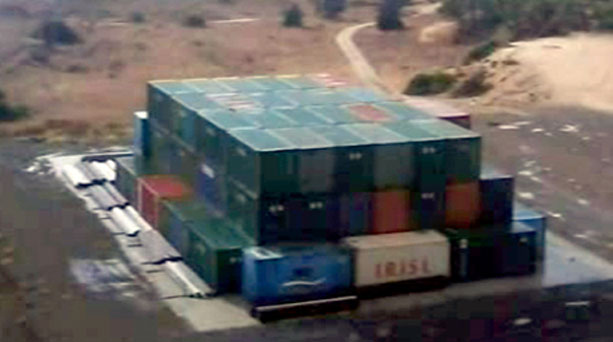
Old Picture of the Ammunition Containers at the Naval Base.
 Νωρίς τα ξημερώματα της 11ης Ιουλίου 2011 μετά από περιστατικό πυρκαγιάς, στην Ναυτική Βάση Ευάγγελου Φλωράκη στο Ζύγι, εξεράγησαν 98 εμπορευματοκιβώτια (containers) με πυρίτιδα και εκρηκτικά τύπου ΤΜΤ με αποτέλεσμα 12 νεκρούς και 62 τραυματίες. Είχε επίσης ανυπολόγιστες ζημιές στη Ναυτική Βάση, στον πετρελαιοπαραγωγό σταθμό της Αρχής Ηλεκτρισμού Κύπρου (ΑΗΚ) και σε περιουσίες στα γύρω χωρία, αφού το ωστικό κύμα της έκρηξης είχε ακτίνα μέχρι και 7 χιλιόμετρα. Τα πυρομαχικά δεν ανήκαν στην Κυπριακή Δημοκρατία. Το 2009 τα είχε κατάσχει, μετά από εντολή των Ηνωμένων Εθνών, από ρωσικό πλοίο, εντός των χωρικών της υδάτων, το οποίο ερχότανε από το Ιράν με προορισμό την Συρία. Τα εμπορευματοκιβώτια αυτά τα τελευταία τρία χρόνια απετέλεσαν αντικείμενο συζητήσεων τόσο στο Υπουργείο Άμυνας όσο και στο Γενικό Επιτελείο Εθνικής Φρουράς (ΓΕΕΦ) χωρίς ουσιαστικά αποτελέσματα ή λύσεις. Επίσης, παρά τις συνεχείς υπενθυμίσεις και επισημάνσεις του Διοικητού της Ναυτικής Βάσης δεν είχαν παρθεί τα απαραίτητα μέτρα προστασίας αν και ο κίνδυνος ήταν πολύ εμφανής.
Το τραγικό αυτό συμβάν σε συνάρτηση με τις υπόλοιπες τοπικές, περιφερειακές και διεθνείς συγκυρίες προβλέπεται να έχει δυσβάσταχτες συνέπειες σε πολλούς τομείς από τους οποίους ο οικονομικός δεν είναι ο λιγότερο σημαντικός. Περαιτέρω αναδύει ερωτηματικά για το ρόλο και την κατάσταση της Εθνικής φρουράς καθώς και για το μέλλον του τόπου. Παρακάτω θα εξετάσουμε εν συντομία κάποιους από τους τομείς που επηρεάζονται από τη «βιβλική» – όπως ονομάστηκε – καταστροφή στο Ζύγι.

Οικονομία
Όπως είναι γνωστό ολόκληρος ο κόσμος και ιδιαίτερα η Ευρώπη περνά μια οικονομική κρίση που έχει ως αποτέλεσμα την αποδυνάμωση τόσο των εθνικών οικονομιών όσο και της ίδιας της Ευρωπαϊκής Ένωσης μέσω της κρίσης της Ευρωζώνης. Τρανταχτά παραδείγματα αυτής της ευρωπαϊκής οικονομικής κρίσης είναι η Ελλάδα και η Ισπανία ενώ τους τελευταίους κυρίως μήνες φαίνεται ότι και η Κύπρος μπήκε στον κατάλογο των επηρεασμένων χωρών. Υπό αυτό το πρίσμα, η συγκυρία μέσα στην οποία έλαβε χώρα η εν λόγω τραγωδία του Ιούλη δεν θα μπορούσε να είναι χειρότερη. Πρόχειροι, ανεπίσημοι, υπολογισμοί λένε ότι για την επιδιόρθωση του ηλεκτροπαραγωγού σταθμού χρειάζονται γύρω στα 500 εκατομμύρια. Κάποιοι άλλοι λένε ότι το ποσό αγγίζει το δισεκατομμύριο ενώ υπάρχουν και αυτοί που ισχυρίζονται ότι συμφέρει περισσότερο η ανέγερση καινούργιου σταθμού παραγωγής ενέργειας παρά η επιδιόρθωση του παρόντος.
Όπως και να έχει, και από όπου και αν έρθει βοήθεια, το σίγουρο είναι ότι η Κυπριακή Δημοκρατία θα επιβαρυνθεί τα μέγιστα ούτως ώστε να αποκαταστήσει το σταθμό του οποίου η παραγωγή καλύπτει το 50-60% της ζήτησης ηλεκτρικού ρεύματος. Πέραν αυτού, που έχει κυρίως μακροπρόθεσμες συνέπειες, υπάρχουν και άμεσες επιπτώσεις στην οικονομία. Η έλλειψη ηλεκτρικού ρεύματος μπορεί να προκαλέσει τεράστιες οικονομικές ζημιές σε μικρομεσαίες αλλά και μεγάλες επιχειρήσεις που αποτελούν την ατμομηχανή της κυπριακής οικονομίας. Επιπλέον άμεσα θα πληγούν οι ξενοδοχειακές και τουριστικές επιχειρήσεις αφού το τραγικό συμβάν και οι επιπτώσεις του μπορεί να διώξουν τους τουρίστες αλλά και να τους αποτρέψουν από το να επισκεφθούν φέτος την Κύπρο. Αυτό βέβαια εντείνει το ήδη υπάρχον οικονομικό πρόβλημα ενώ παράλληλα μπορεί να οδηγήσει και στην αύξηση της ανεργίας αν τέτοιες επιχειρήσεις αναγκαστούν να σταματήσουν να εργάζονται. Επιπτώσεις βέβαια υπάρχουν και για την οικονομία της ΕΕ αφού πλέον η αλληλεξάρτηση των κρατών-μελών της σε οικονομικό επίπεδο και η εύθραυστη οικονομική κατάσταση αυτή τη στιγμή δεν αφήνουν πολλά περιθώρια.
Εννοείται, συγχρόνως, ότι η ενεργειακή κρίση που προκάλεσε η καταστροφή του ηλεκτροπαραγωγού σταθμού φέρνει στο προσκήνιο τόσο την ανάγκη για ανανεώσιμες πηγές ενέργειας όσο και την ανάγκη ταχείας εκμετάλλευσης των υποθαλάσσιών μας ενεργειακών πόρων. Η σοβαρότητα βέβαια αυτού του προβλήματος συνεπάγεται και την ανάγκη δημιουργίας μιας καλά μελετημένης στρατηγικής στον τομέα της ενέργειας ούτως ώστε να αντικρουστούν οι οποιεσδήποτε προσπάθειες εκμετάλλευσης της ευάλωτής μας θέσης αυτή τη στιγμή.
Τα προβλήματα όμως δεν σταματάνε εδώ.

Πολιτική
Η οικονομική αποδυνάμωση ενός κράτους συνεπάγεται τη μείωση της συνολικής του ισχύος. Αυτό βέβαια δεν σημαίνει ότι το παραλύει αλλά όντας σε μειονεκτική θέση δεν του επιτρέπει να κινηθεί όπως θέλει τόσο στην εσωτερική όσο και στην εξωτερική του πολιτική. Έτσι, συνήθως, χάνει τη λαϊκή υποστήριξη με συνέπεια την σύγκρουση κράτους-κοινωνίας. Στην Κύπρο όμως τα πράγματα είναι ακόμα πιο περίπλοκα δεδομένου του πολιτικοστρατιωτικού προβλήματος που η Κυπριακή Δημοκρατία αντιμετωπίζει με τις τουρκικές κατοχικές δυνάμεις, την τουρκοκυπριακή ηγεσία και ιδιαίτερα την Τουρκία.
Με αφετηρία το γεγονός ότι η Τουρκία ακολουθεί μια πολιτική αναμονής περιμένοντας να εκμεταλλευτεί οποιεσδήποτε πραγματικότητες προκύψουν, τότε προκύπτουν αρνητικές πιθανότητες. Όταν ένα κράτος χάσει μερίδα της διπλωματικής του ισχύος – η οποία όντας συνδεδεμένη με όλες τις άλλες πηγές κρατικής ισχύος δεν μένει ανεπηρέαστη – τότε η αποτελεσματικότητά του στο πλαίσιο οποιονδήποτε διαπραγματεύσεων είναι αμφίβολη. Επιπρόσθετα, αν η Κυπριακή Δημοκρατία τελικά αντιμετωπίσει μια σημαντική οικονομική αποδυνάμωση τότε θα βρεθεί σε μειονεκτική θέση σε ότι αφορά συμφωνίες με κράτη ή εταιρίες για το διαχωρισμό των ενεργειακών της πηγών. Με αυτό το τρόπο μπαίνει δηλαδή σε ένα φαύλο κύκλο όπου η οικονομική ανεπάρκεια και η κοινωνική αστάθεια αποτρέπουν τις όποιες διεκδικήσεις. Πρέπει όμως να γίνει ξεκάθαρο πως όταν μιλάμε για τα διάφορα είδη κρατική ισχύος ή στρατηγικής, αυτά δεν είναι απρόσωπα. Όλα αυτά τα επίπεδα διακυβέρνησης και δημιουργίας πολιτικής είναι ελεγχόμενα από άτομα που φέρουν είτε προσωπική είτε συλλογική ευθύνη σαν μέλη πολιτικών κομμάτων. Στην Κύπρο ειδικά, η διαφθορά, ο νεποτισμός και το προσωπικό συμφέρον που χαρακτηρίζουν την κρατική μηχανή, ευθύνονται για αποτυχίες της εξωτερικής και εσωτερικής πολιτικής καθώς και για την κακή διαχείριση της οικονομίας.
Εθνική Φρουρά: Αποστρατικοποίηση τώρα!
Μια άλλη παράμετρος αυτού του ζητήματος, η οποία δεν μπορεί να μείνει ασχολίαστη, είναι αυτή της Εθνικής Φρουράς (ΕΦ). Παρόλο που τα εμπορευματοκιβώτια με τα πυρομαχικά δεν ήταν ιδιοκτησία της Κυπριακής Δημοκρατίας, η αδυναμία της ΕΦ να προλάβει τα χειρότερα παρουσιάζουν συστημικά προβλήματα τόσο της ίδιας όσο και του Υπουργείου Άμυνας πιο συγκεκριμένα. Σε αυτή τη συζήτηση φυσικά δεν πρέπει να παραμεληθεί το γεγονός ότι το τραγικό αυτό ατύχημα δεν είναι το πρώτο που συμβαίνει στην ΕΦ. Ένα παράδειγμα, το οποίο αποτελεί και τραγική σύμπτωση είναι ο θάνατος του αρχηγού της ΕΦ Ευάγγελου Φλωράκη, το όνομα του οποίου είχε η Ναυτική Βάση όπου έγινε η έκρηξη, στις 10 Ιουλίου 2002 μετά από πτώση ελικοπτέρου. Τα ατυχήματα της ΕΦ όμως δεν περιορίζονται σε αυτό. Περιλαμβάνουν και άλλους λάθος χειρισμούς πυρομαχικών ή οπλικών συστημάτων οι οποίοι προκάλεσαν θανάτους και τραυματισμούς.
Διερωτάται κανείς τι πρέπει να γίνει ενώ έχουν βγει διάφοροι οι οποίοι υποστηρίζουν πως η ΕΦ χρειάζεται μεγαλύτερη κρατική χρηματοδότηση. Το επιχείρημα είναι ότι είμαστε ένα κράτος υπό κατοχή και πρέπει να έχουμε τα μέσα να αμυνθούμε σε περίπτωση ανάφλεξης του προβλήματος με την Τουρκία. Η αλήθεια βέβαια είναι ότι η ΕΦ, μετά το 74’, έχει σκοτώσει περισσότερους Ελληνοκύπριους στρατιώτες παρά η Τουρκία. Επίσης όταν κάποιοι λένε πως η ΕΦ χρειάζεται περισσότερη χρηματοδότηση φαίνεται ότι υπερεκτιμούν το ρόλο και τις δυνατότητες της, υποτιμούν τις δυνατότητες της Τουρκίας, ενώ παράλληλα αγνοούν τις διαχρονικές επιπτώσεις της διατήρησης της ΕΦ στην οικονομία και στην κοινωνία. Τα δεδομένα έχουν αλλάξει. Το τραγικό είναι ότι με βάση την ορθολογική και νηφάλια ανάλυση των καταστάσεων γίνεται ξεκάθαρο ότι η αποστρατικοποίηση θα υπηρετούσε πολύ καλύτερα τους σκοπούς της Κυπριακής Δημοκρατίας, τόσο σε πολιτικό και οικονομικό επίπεδο όσο και σε…προσέξτε…στρατηγικό επίπεδο (Θα ακολουθήσει άρθρο το οποίο θα ασχοληθεί αποκλειστικά με τα υπέρ της αποστρατικοποίησης στα διάφορα επίπεδα).
Μέσα σε όλα αυτά βέβαια ας μην ξεχνάμε και ότι η διατήρηση μιας αναποτελεσματικής και ντροπιαστικής – θα έλεγα – ΕΦ η οποία επί της ουσίας δεν παρέχει κανένα θετικό στο κράτος και επιβαρύνει την οικονομία είναι χειρότερη από τα θετικά που μπορεί να παρέχει η αποστρατικοποίηση.
Αν και σε αυτό το άρθρο βαρύτητα δεν δόθηκε στην απόδοση ευθυνών, εννοείται ότι κάτι τέτοιο επιβάλλεται. Επίσης έχει λεχθεί ότι οι παραιτήσεις του Υπουργού Άμυνας και του αρχηγού ΓΕΕΦ δεν λύνουν το πρόβλημα. Όσο και αν αυτό είναι αλήθεια είναι ευκολονόητο και πολύ εύκολο να ειπωθεί. Το ζήτημα όμως δεν βρίσκεται στα εύκολα και εμφανή αλλά σε αυτά που πρέπει να αναζητηθούν. Πρέπει επίσης οι παραπάνω πραγματικότητες να μετρηθούν με σοβαρότητα και να ληφθούν αποφασιστικά μέτρα και αποφάσεις για την υπερπήδηση οποιονδήποτε εμποδίων. Σε τέτοιες στιγμές δεν χωράνε επιφανειακές πολιτικές ούτε δογματικές αντιλήψεις. Οι κυβερνώντες αλλά και ολόκληρη η πολιτική σκηνή της Κυπριακής Δημοκρατίας πρέπει να εργασθούν για το κοινό καλό. Αυτή είναι η ευκαιρία τους να επιδείξουν πολιτική ακεραιότητα και να ανατρέψουν την επικρατούσα εικόνα της αποτυχίας και αναποτελεσματικότητας που διατηρεί η πολιτική σκηνή της Κυπριακής Δημοκρατίας εδώ και σχεδόν 40 χρόνια.
Υ.Γ.: Έχω αντιληφθεί ότι το παραπάνω άρθρο έχει χρησιμοποιηθεί – κυρίως στο facebook – από υπέρμαχους της φυγοστρατίας με σκοπό την στήριξη των επιχειρημάτων τους. Επειδή δεν είμαι χρήστης του παραπάνω κοινωνικού δικτύου θα πω μερικά λόγια εδώ για να ξεκαθαρίσω την όποια παρεξήγηση και τη στάση μου στο θέμα.
Το ζήτημα της αποστρατικοποίησης καμία σχέση δεν έχει με την φυγοστρατία. Το ζήτημα της αποστρατικοποίησης έχει να κάνει με πολιτικούς, κοινωνικούς και οικονομικούς λόγους και όχι με το γεγονός ότι κάποιοι δεν θέλουν να υπηρετήσουν για τον ένα ή τον άλλο λόγο. Σωστά ή λάθος, το κράτος επιβάλει την 2ετή υπηρεσία στην ΕΦ και ο καθένας είναι υποχρεωμένος να την ακολουθήσει. Αντιλαμβάνομαι ότι νόημα ίσως να μην υπάρχει γι’ αυτό και προτείνω αποστρατικοποίηση. Σε κάθε περίπτωση όμως η φυγοστρατία δεν είναι λύση ούτε ο σωστός τρόπος δράσης αφού αποτελεί άναρχο και εγωκεντρικό τρόπο αντίδρασης. Με την ίδια λογική μπορούμε να περνάμε όποτε θέλουμε τα φώτα τροχαίας με κόκκινο, να κλέβουμε, να σκοτώνουμε και ούτω κάθε εξής. Η φυγοστρατία είναι μέρος του συστημικού προβλήματος.

The Syrian Crisis and Turkey

After Tunisia, Egypt and Libya, Syria is fast becoming one of the bloodiest domino pieces of the Arab Spring which has shaken the Middle East, North Africa and the Persian Gulf. Yet, the Syrian crisis is a little different in the sense that it could have much greater and more tragic implications for its neighbourhood – namely, in Turkey, Lebanon, Israel and Palestine. However, at the moment, the unrest seems to have had direct effects mainly on Turkey which has found itself in a very difficult situation.
When the riots in Syria first started they were relatively small scale and so today’s mass turnouts could hardly have been predicted. At the outset of the protests (mid-March) the Turkish response was fairly calm, although everyone knew what was at stake if the crisis were to escalate. What Turkey did make clear though was its opposition to any intervention in the area. Specifically, the Turkish Foreign Minister, Ahmet Davutoglu, said that any international intervention must be avoided because it could bring unwanted results, while Prime Minister Tayyip Erdogan said that if the international community were confronted with massacres in Syria, then Turkey should undertake a leading role in any response. In the same spirit, Turkey asked for more time to be given to Syria in order for it to implement the reforms promised by President Bashar al-Assad. In the meantime the Turkish government sent humanitarian assistance to its border with Syria to ease any problems caused by the influx of refugees.
Despite the Turkish government’s outward calm, it soon realised the instability that this crisis could bring within its borders, and gradually changed its position. That is, of course, because of the great strategic importance of Syria and its Kurdish population to Turkey in terms of the broader Kurdish problem that Turkey is facing internally and externally. The intensity of the Syrian/Kurdish problem together with the international presence in the region would be a threat to Turkey’s national interests and territorial integrity and so it is understandable that Erdogan’s government would want to take the lead in managing any response.
As it turns out the crisis has not remained limited. Over 1,400 people have been killed and the Syrian refugees that Turkey hosts now number more than 10,000. Furthermore, Bashar al-Assad’s army has been battling protesters and attacking Syrian villages very close to the Turkish border. As the situation with respect to the Kurdistan Workers’ Party (PKK) worsens and the refugee numbers in Turkey rise, the Turkish government has started to lose its cool. The possibility of a further escalation of the crisis in major civic centres like Damascus, would likely lead to a substantial increase in the flow of refugees. Such a scenario, which could destabilise Turkey internally and give opportunities to the Kurds, is what Ankara fears the most. That is why Turkish authorities are considering the establishment of a safety zone inside Syrian territory to prevent such a development.
The danger though is very real given that the tipping point where a revolt against a regime becomes a civil war seems very close in Syria. That is when the military becomes divided – and marked the decisive point in Egypt’s crisis for Mubarak to step down, as it did in the Libyan civil war we are now witnessing. It has been reported that Syrian military units “clashed with each other” over orders to “crackdown on protesters”. Indeed, this may only be the tip of the iceberg given that we do not know exactly what is happening in Syria, since all foreign media have been prohibited.
It is worth noting that the US and UK share Turkey’s concerns. After all, another war in this geopolitically sensitive region, between Turkey, Iraq, Iran and Armenia is the last thing both the West (particularly the US) and Turkey want. It is true, however, that the current situation challenges in the hardest way Turkey’s doctrine of “zero problems with neighbours” and its “soft power” diplomacy. The newly re-elected government under the Justice and Development Party (AKP) and PM Tayyip Erdogan are facing a very difficult situation which could determine whether Turkish foreign policy since 2002 when the AKP was first elected has been successful or not. No matter how difficult the task is for the Turkish government, it seems determined to closely monitor the developments not only in Syria but also in the Middle East more generally. Such intentions have been made clear after foreign minister Ahmet Davutoglu announced his Middle East tour, which will also include Syria.
The good relations between Turkey and Syria of late have undoubtedly become strained as a result of the recent crisis. It is clear that no one, neither the West nor Turkey, want a further escalation although the Syrian regime does not seem to be about to give up anytime soon. However, Turkey seems ready to take the appropriate measures in order to maintain the stability in the region and more importantly within its borders. A military confrontation between Turkey and Syria or a rapprochement between Turkey, Israel and the US should not come as a surprise given that Turkey will use all necessary means to achieve its goal of achieving national cohesion and securing its territorial integrity. At this stage of the game for Turkey, the stakes are too high for half measures
Zenonas Tziarras
Posted on Global Politics, July 2, 2011.

Elections in Turkey

Abstract
The victory of Erdogan’s Justice and Development Party (AKP) was very much expected in the recent Turkish Parliamentary elections that took place on June 12. The AKP managed to get 49.9% of the votes which is not sufficient for an overall majority in the parliament and means that the winners will likely have to seek cooperation with their opponents in order to achieve certain goals. Below we examine the possible outcomes of the AKP’s attempts to create a new constitution as well as assessing the broader outlook for Turkey as it goes forward.
Even without the vast majority that many expected, the AKP’s victory is clear and will help it to start implementing its agenda, albeit with more difficulty than it would like. Of course, this agenda has been much discussed over the last weeks and many of its points are probably known by now. Among other things it includes Turkey’s relations with the EU, the Kurdish question, energy policy and the effort to create a new constitution. The latter point about the new constitution is the culmination of Erdogan’s policy since the AKP’s first election in 2002 which aims to weaken Turkey’s “Deep State” – or in other words the military’s influence in political life – and reduce its influence in the state’s governing apparatus. This will enhance and ease the AKP’s rule by promoting its political objectives, especially its challenging foreign policy agenda.
The efforts to create a new constitution seem like a relatively easy and mostly bureaucratic undertaking since, as has been argued by many, the AKP will likely be able to implement it eventually, either through cooperation in parliament or a referendum. That would, of course, be yet another victory for the AKP after the success of the referendum of September 12, 2010 and the past elections. But this is far from the reality. The political battle[1] that Erdogan and the AKP are about to fight, is perhaps the hardest since the “Ergenekon” case where Kemalists, linked to the army, planned to overthrow Erdogan’s government.
It is important to note that a large part of Turkish society, approximately 30% or more, still supports the Kemalist character of the state and is concerned about the future of the country under the Islamist government of Erdogan. Perhaps the gradual emergence and strengthening of Islam in the country’s political life was inevitable since Kemal’s attempt for modernisation overlooked the extent to which Islam was part of the culture of the people and elites. Nonetheless, Erdogan’s policy today is not all that different. Since 2002, using the guise of Turkey’s candidacy for EU accession and its quest for democratisation, the AKP has implemented various reform packages which aimed, among other things, to undermine the Kemalist influence. We have seen, however, that this process has not left the Kemalist generals unmoved for yet again in the history of the Turkish state, they have tried, albeit unsuccessfully, to overthrow the government.
In this light, Erdogan’s attempt to implement a new constitution could be shown to be an even greater danger to the country’s stability. The Kemalists, though weakened, are likely to react unpredictably if a serious attempt to revise the constitution were to take place, since it is this very constitution that made them protectors of the Turkish state and the guardians of the Kemalist principles. In essence, Erdogan is methodically trying to uproot the ideology upon which the creation of the Turkish state rests.
The AKP’s challenges in establishing a new constitution are expected to be stiff. In terms of Turkey’s policy on issues such as the Kurdish Question, the Greek-Turkish Relations and the Cyprus problem, the country’s behaviour is not likely to change. This is mainly because of the geo-economic developments in the Eastern Mediterranean as well as because of Turkey’s questionable ambition to become part of the EU. At its core, the clash between Islam and Kemalism is a conflict over power. However, in national issues (e.g. Armenia, Cyprus, Greece), the interests at stake are the same for both sides.


[1] There has always been a political battle between Kemalism and Islamism (in this case the AKP). Kemalism (named after Kemal, the founder of Turkey) is the ideology upon which the creation of Turkey was based and is mainly driven by secularism and nationalism while opposing the engagement of religion (Islam) in politics. The armed forces are by law the protectors of the Kemalist principles. Islamism – and particularly Turkish political Islam – has its roots in the Ottoman tradition and culture. Since the mid-20th century up until today it has been getting stronger and more involved in the state’s political life, thus causing a clash between the secular Kemalists and neo-Ottoman Islamists.
Zenonas Tziarras
Posted on June 26, 2011, on www.global-politics.co.uk.

Ο Ερντογάν, το Βαθύ Κράτος και οι Εκλογές στην Τουρκία.

Μετά την αναμενόμενη νίκη του Ερντογάν και του κόμματός του (AKP),  η προσοχή στρέφεται στο επόμενο βήμα των νικητών. Ακόμα και χωρίς την συντριπτική πλειοψηφία που πολλοί περίμεναν, η νίκη του ΑΚΡ είναι ξεκάθαρη και – αν και με περισσότερη δυσκολία απ’ ότι θα ήθελε – θα τον βοηθήσει να βάλει μπρός την υλοποίηση της ατζέντας του. Βέβαια, η εν λόγω ατζέντα έχει πολυσυζητηθεί και πολλά από τα σημεία της είναι πλέον γνωστά. Μεταξύ άλλων περιλαμβάνει τις σχέσεις με την ΕΕ, το Κουρδικό, τη ενεργειακή πολιτική και το νέο σύνταγμα. Ο τελευταίος στόχος που αφορά το νέο σύνταγμα είναι και η κορύφωση της πολιτικής που ακολουθεί ο Ερντογάν, από την πρώτη εκλογή του ΑΚΡ το 2002, που στόχο έχει την αποδυνάμωση του Βαθέως Κράτους και την μείωση της επιρροής του στον κρατικό μηχανισμό. Αυτό θα ενισχύσει και θα ευκολύνει την διακυβέρνηση του ΑΚΡ δίνοντας ώθηση στους πολιτικούς του στόχους και στις υπεραισιόδοξες διεκδικήσεις του στην εξωτερική πολιτική.

Η διαδικασία αυτή μετά τη νίκη του Ερντογάν ίσως να φαίνεται σαν ένα σχετικά εύκολο και κυρίως γραφειοκρατικό εγχείρημα, εφόσον προβλέπεται ότι θα εφαρμοστεί, έστω μέσω συνεργασίας στο κοινοβούλιο και δημοψηφίσματος, αποτελώντας ακόμη μια νίκη μετά τις επιτυχίες του δημοψηφίσματος της 12ης Σεπ. 2010 και των εκλογών. Αυτό όμως πόρρω απέχει από την πραγματικότητα. Η πολιτική μάχη που πρόκειται να δώσει ο Ερντογάν και το ΑΚΡ είναι ίσως η σκληρότερη μετά την υπόθεση «Εργκένεκον» όπου κεμαλιστές οι οποίοι συνδέονταν με τον στρατό σχεδίαζαν την ανατροπή της κυβέρνησης Ερντογάν. Πιο κάτω εξετάζουμε το πως θα μπορούσε να εξελιχθούν οι προσπάθειες για νέο σύνταγμα.

Continue reading